
.png)
There was a barn in southern Tennessee that looked just like the ones I remember from Indiana as a kid.
Back then, we’d pack into the car and drive the 12 hours from New Orleans to the Midwest, wending through Meridian and Birmingham and Huntsville and Nashville and Bowling Green and Owensboro, until we arrived at the banks of the Ohio River.
Along the way, our tiny VHS player-and-screen kept us sort of entertained. We watched a lot of Fess Parker as Davy Crockett, where I witnessed many a scalping before the age of 10.
Once we arrived, my favorite activity was riding passenger along the winding two-lane roads that ran between the small towns in Perry and Spencer counties. Towns with names like Cannelton, Fulda (pronounced Fuldy), and Santa Claus—a real place where my grandparents lived.
This was the look of America that I saw on my textbook covers back home. A country alien to the place I lived. There was the giant monastery perched on a hill in Ferdinand. And the Ruxer furniture store, run by relatives out of an old storefront in St Meinrad. Mostly, there was corn.
Going there was, to a 12-year-old me, the equivalent to touching grass, and it’s a feeling I seek to this day.
A few weeks ago, I was driving one of these two-lane highways somewhere south of Nashville on a research trip for work. As I descended into a valley, a great old barn loomed over a curve in the road. It rose higher as I approached it, and the haybale-spangled fields behind it completed the picture. To borrow from Lana Del Rey (again), it looked like Norman F****** Rockwell.
My foot eased off the accelerator, and I let the car coast so I could take in the scene.
The curve brushed me 90 degrees to the right, and the barn faded. This was somewhere between the towns of Tullahoma and Normandy, where they make George Dickel whisky. Or was it Normandy and Bell Buckle?
The place may have no name at all, but the moment I passed it felt a little different. A simple vista that broke up a few miles of the mundane.
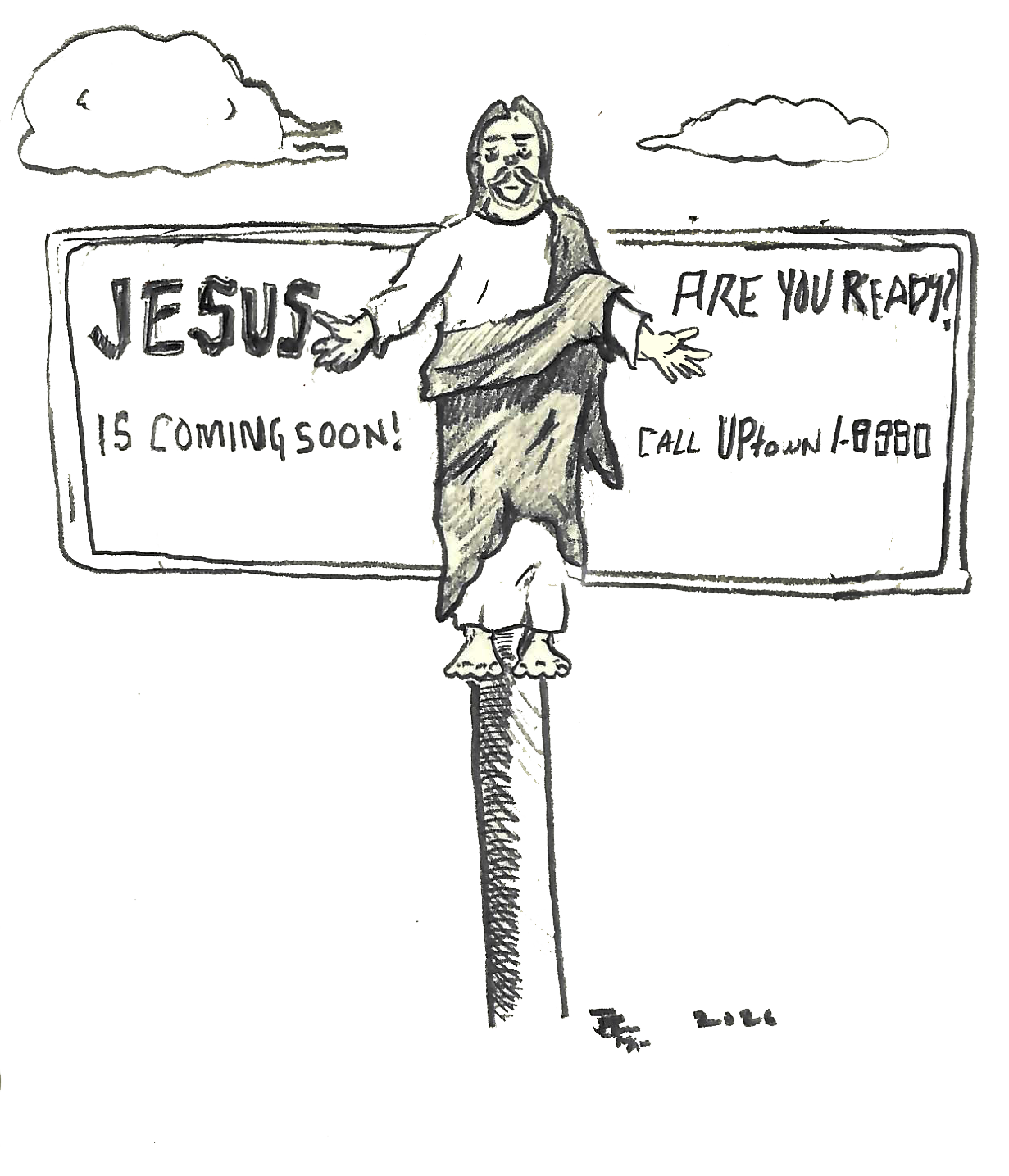
Among the Waffle Houses, thrift stores and Jesus, surprises like this one crept in across Tennessee. In the Shelbyville town square, Pope’s Café churned out a delicious patty melt. In Lewisburg, the headquarters of the Tennessee Walking Horse Breeders' & Exhibitors' Association led me down a rabbit hole of research into those animals, whose stables dotted one 20-mile leg of highway.
The delights of these Tennessee roads, like those in Indiana, didn’t stick out too much from the normal fare. If anything, they slowed me down for a second and pulled at my curiosity. As I drove from town to town, I made a mental catalog of the lives and communities and traditions that sustain all the points between.
Not that it’s all so romantic.
Three years ago, I took another research trip across Louisiana. Somewhere in desolate Franklin Parish, I slowed down to take in a sight. Next to the road, a crop-dusting barn sat beside a modest house in a field. I rolled down the window and snapped a photo.
Fifteen minutes later, a dually pickup truck pulled within ten feet of my tailpipe going more than 60 miles per hour. The driver honked his horn and flashed his lights and waved like a lunatic for me to stop. I didn’t know what else to do but to accept. How far was I from a real town? (Judging by the rest of my drive, far.) What police would I even call to get this guy off me? (Maybe he was the police.)
I slowed to a halt, turned my music to zero, and watched him approach in my sideview mirror. I rolled down the window and said something like, “yeah?”
“I just want to know who you are?”
“I’m up from New Orleans, doing research on tourism in Louisiana.”
“So, you aren’t one of them lawyers?”
I told him I was not. He asked why I took a photo of his hangar.
“Well, I’m capturing the scenery,” I said.
The lawyers had done their damage. Years of lawsuits against his crop-dusting business made it hard for him to live day to day. My drive-by shot, he suspected, could portend a new chapter in this long-running saga.
We talked longer than we needed to. Maybe he tracked me down to interrogate me about my occupation, but now that he had me, he eased into gentle conversation about his business, his home (over in the town of Sicily Island), and his bewilderment that any tourist would want to visit here (I joined him in that sentiment).
As my car crept forward, toward Poverty Point, I felt that my stomach had dropped. The danger of the situation hit me, and the adrenaline flowed. I saw his truck make a U-turn in the rearview and took a deep breath.
What if I had been a lawyer? I guess I wouldn’t have been so dumb.
For a moment, my nerves were back in those roads of Indiana, packed into a car full of cousins on our way to Holiday World—the Disney of the Midwest. There was always one hill on the way to the park that rose so steeply that it gave your stomach the sensation of weightlessness.
Back then, we’d rise and fall, saying “this is the one,” as hill after hill passed innocuously. And then the adult behind the wheel would floor it near the upcoming crest, and the bottom would fall out on all of us screaming in the back.
Somewhere in those mundane hills, a cornfield became a roller coaster. If you didn’t drive the open road, you’d never know it was there.