
.png)
On the first day of sailing camp, you’re compelled to pass a swim test.
If you’re going to spend your summer on a tiny sailboat in the middle of a big lake, treading water for ten minutes might save your life.
But the hard part of the swim test wasn’t the swimming part. At the end, each of us had to submerge in the deep end of the pool, remove our life jackets, and slip them back on, all without a breath.
One after another, campers would squirm beneath the water in a contorted struggle that seemed useless. Even after a few years of sailing, I questioned why this was a necessary skill.
A few weeks later, the reasoning became apparent to me. Our group was engaged in a game of “Pirates,” the point of which was to climb into other kids’ boats and dismantle, capsize, or otherwise cripple them. It was a welcome respite from our usual routine of drills and mock races.
In the middle of the fray, I crawled into a friend’s Optimist—that’s the little dinghy that you sail as a beginner—hugged its mast, and leaned toward the water, bringing the rest of the boat with me. Once submerged, I tried to swim away. To return to my flagship. But part of my life jacket got caught in a piece of rigging.
I groped underwater for a way to detach myself, but after a few seconds, I knew I wasn’t coming undone. Stuck, and verging on panic, I remembered the end of the swim test. I shimmied out of my vest and rushed to the surface. A pirate almost laid low by his own pillage.
Let’s get one thing straight: Learning to win a race is fine, but it doesn’t compare to cheating death.
Growing up in a sailing community, I listened to a lot of Jimmy Buffett. Even at the age of 11, I connected with his song “A Pirate Looks at 40,” a lament that his ne’er-do-well ways are out of touch with his time and place. And though I shared little with his “over 40 victim of fate,” his pursuit of a freewheeling life on the water resonated deeper than my coaches’ lessons on sailing strategy.
Strategy that was fed to us every weekend morning.
Most Saturdays, our fleet of little boats would sail out a half mile or so into Lake Pontchartrain, line up, and race each other to prepare for the next regatta on the calendar in a town like Gulfport or Pensacola. As we raced, parents circulated in center-console motorboats to watch, coach, drink beer and smoke cigars.
On one such morning, we were engaged in a series of practice races when the western sky turned black. We knew this meant minutes until heavy wind and rain. Our south Louisiana storms are quick, but violent.
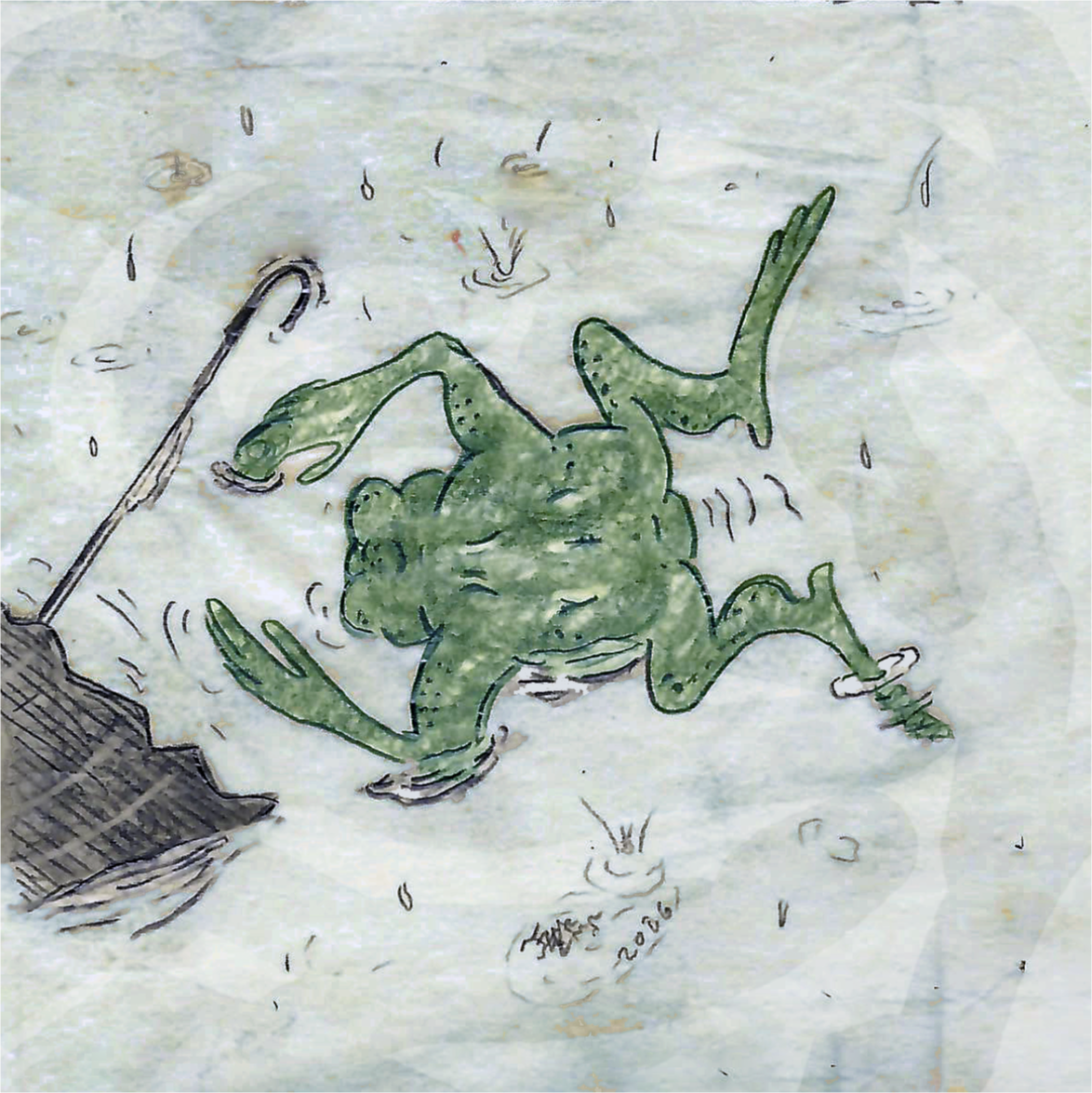
Hurriedly, futilely, the parents circling the fleet tied our bowlines to their cleats and motored toward the harbor. We made it about halfway in when the squall landed on us.
The wind ripped through our chain of boats, churning up the shallow lake water into a whitecapped frenzy.
Then the rain. So thick and fat that it was difficult to see the boat in front of you, much less the parent to whom you were tethered.
Despite the weather, we’d nearly made it to the breakwater that protected the harbor. Then Pearson’s boat capsized. This halted our progress. Some of the sailors screamed to keep going. At least one suggested that we cut him loose (he wasn’t the most popular kid in the fleet). But Pearson’s dad—also named Pearson, a sailing name if there ever was one—was giving us the tow.
We were dead in the water.
As they tried to right the boat, the gusts pushed more waves that swamped and flipped our bathtub-sized boats, one by one. Each of us became untied and drifted toward the seawall 50 yards away.
Those moments are hazy, but I can remember clinging to my Optimist with one arm like the survivor of a shipwreck. I remember my squeaky rubber boot finding the first algae-covered step of the seawall as I struggled to climb to safety. I remember two men descending to yank my boat out of the water, its rigging and sails in a hopeless tangle. I remember seeing the first other member of my group, a girl with whom I wasn’t even friends, and hugging her like she was my mother.
Our group of pirates had been shipwrecked, and we lived to tell the tale. The stories reverberated around the snack bar where we reconvened, each of us pouring our experience into an intoxicating punch bowl of survival.
It was the highest I ever felt coming off the water. For once, it felt like we’d engaged in a game with real stakes. And for once, we’d all won.
My brother went on to be a competitive sailor through high school. He got his captain’s license and still races to this day.
I fell out of love with the sport a few years after the squall. I didn’t want to spend my Saturday mornings in the dockside classroom sketching tactical adaptations to wind shifts in the back of my math composition book. On race days, my tactical errors—or bad luck—frustrated me to the point where I’d simply give up.
I’d sail back to the dock, alone, sometimes crying at my misfortune, my weakness, or both. Wondering why, after all the effort we spent learning how to win, we couldn’t all just be pirates.