
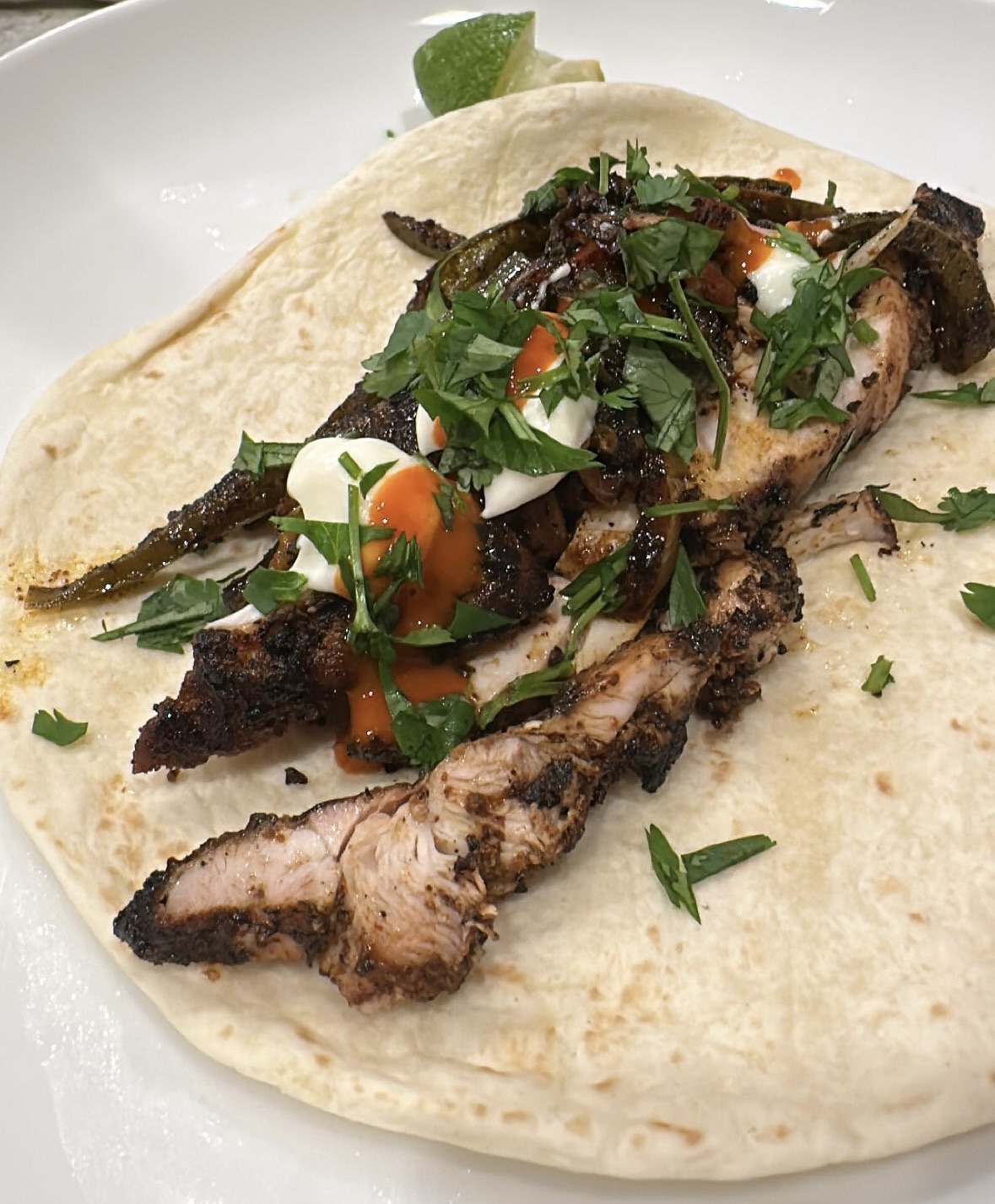
Editor's note: Sorry about the photo. Illustrator Josh is away this week.
When I was a kid, Emeril Lagasse felt like a towering cultural figure.
So when my dad brought home a signed copy of Emeril’s kids cookbook There’s a Chef in My Soup, I ran into the kitchen eager to try my hand at something he’d spent years, many here in New Orleans, mastering.
I tried to cook. And it was not good.
Let’s get one thing straight: Practice does not make perfect. It makes something even better: Creativity.
I can’t remember the first recipes I made from those pages, but I can remember serving the food to family and friends. They ooh’d and ahh’d in the way you do to please a seven-year-old trying something for the first time.
When they asked what I thought, I was candid: “I don’t really know what it is, and I don’t like it.”
My mother carried the lion’s share of kitchen duties under my watchful eye. I’d look at the wall of cookbooks and feel like creativity lived on those spines, not in my hands. Stories got printed. Movies got made. I burned CDs.
By the time I started cooking seriously after college, recipes felt endless and close at hand. It took years to really understand what I was doing, and most of that rudimentary knowledge came from a book. Salt, Fat, Acid, Heat by Samin Nosrat awoke in me a potential for creativity I’d self-snuffed after my brush with Emeril.
Her philosophy was inspiring, yet simple: master the core elements of cooking, and you can essentially create anything.
But the create part still eluded me. I could churn out a decent version of just about any New York Times recipe you put in front of me, but improvising from scratch terrified me.
The seed was planted on a drive that took hours longer than it should have. My wife and I, bound for Houston, hit traffic at every choke point, turning a six-hour drive into a ten-hour ordeal.
By the time we pulled into my friend’s driveway, we’d exhausted S-Town, the only podcast we’ve ever listened to together, and I’d exhausted my then-girlfriend-now-wife with my impression of its Alabama philosopher protagonist, John B. McLemore.
Ah’m just sittin’ here, thankin’ about clahmat chaynge.
We needed a drink and a heavy meal, and our hosts took us to El Tiempo Cantina.
There, driven by hunger, queso, tequila, and a Grand Marnier floater, I experienced an ethereal moment in the history of my palate. A sizzling platter of fajitas emerged from the kitchen. The vegetables glistened. The tortillas had spots ever so deftly browned. We dipped them into steaming garlic butter, and the ordeal of the road felt far away.
Months went by and I thought about that meal a lot. Around then, J. Kenji López-Alt caught my eye with his riffs on common foods and unusual techniques. The one that led to my first recipe was rooted in mayonnaise.
He argued that mayo was the secret hero of a marinade. It clung to the protein. It browned and burned off in the process, leaving a charred, flavorful coating behind.
By the time I finished reading Kenji’s story, my brain had mutated his chimichurri chicken into a new method for fajitas.
I went into the kitchen the next day to try it out.
I combined mayo, a healthy dash of seasonings, and lime juice in a bowl. I slathered it over chicken breast that I’d sliced thin. Since I didn’t have a grill, I threw it in a hot cast iron pan. Meanwhile, the oven tenderized a sheet pan of onions, bell peppers, jalapeño, and garlic. Thrown into the residual mayo-nade, the veggies curled up and blackened in a sea of spice.
The first bite was bliss. The rest were rash, hurried in a way that I couldn’t believe, because I didn’t really believe that I’d come up with it.
Then something happened that surprised me even more than the food.
I feverishly recorded what I’d just done in my Notes app. I noted ingredients, quantities (as far as I could remember), and the steps I’d taken.
People tend to talk about creativity like a lightning strike. But if it is to be a “spark,” to me it’s more like static electricity. It rides around on your sweater until you touch the right surface. Then zap—or BAM, as Emeril would say—a little creative mutation.
Practice buys you the right to improvise. That zap gives you the nerve to call it yours.
When I made the fajitas again, I let instinct take over. I deviated from what I’d written down, but made notes as I went. To my delight, they turned out the same, maybe even better. The vegetables glistened, charred in spots by the skillet. The chicken held onto its spicy coating, its juices running off the end of the tortilla.
A friend over for dinner that night asked for the recipe. Someone who saw my Instagram Story did the same. I texted them my Note. They passed it on to family and friends who added their own improvisations.
I was tickled that a recipe I’d created had taken on a life of its own.
Years of practice, successes, and failures paid off in an instant. That little act of mutation gave my friends something new to share and enjoy. It was a reminder of why we create in the first place.
I’m not close to writing a cookbook, but I have a few recipes in the bank. More importantly, I trust myself in the kitchen enough to turn pantry ingredients into dinner without any guide.
I’d encourage anyone reading this to think about what you practice, intentionally or not, on a day-to-day basis. Then remain inspire-able. Be open to mutation.
And BAM, you might get the thrill, too.
Here it is. Taken from my Notes app with no edits.
Slice chicken breasts in half and salt evenly. Set aside.
Prepare mayonade. Squeeze one lime (or some fresh orange juice, or both) in a bowl. Put a tablespoon of chili powder, teaspoon of cumin, half teaspoon of garlic powder and oregano (you can change these quantities to taste). Add a couple huge gobs of mayo and mix. Season with salt and pepper. Taste it and make sure it’s balanced. It should be pretty thick. At this point you can also add meat and let it marinade for a few hours.
Add sliced peppers, jalapeños, and onions and chopped garlic to a pan. Season with some salt, pepper, and chili powder. Toss in oil. Put in 425 degree oven.
Brush chicken slices on both sides with mayonade. Add to a very hot pan with a little oil and cook, flipping back and forth, till done on the inside and blackened on outside. Alternatively, grill over high heat and return excess marinade to a frying pan to finish veggies. Cook excess marinade over high heat for a couple of minutes to cook the mayo off, then add veggies, as directed in next step.
After chicken is done, add the veggies in batches to the chicken pan (or pan with excess marinade if you grilled) and cook until they’re burning.
Serve on warmed tortillas with squeezed lime and grated cotija.